
A Sanctuary Close to Care: Jameson’s Story
When Jameson first arrived at the feeding clinic in the summer of 2018, his family walked through the doors carrying the kind of hope that’s equal parts courage and exhaustion — the hope that comes when you’ve tried everything you know to help your child, and you’re finally standing in the place where someone might have answers. They didn’t know then how long this journey would last. They didn’t know how many times they would return. And they certainly didn’t know that the night before an evaluation — a single overnight stay — would turn into something that would hold their family together for years.
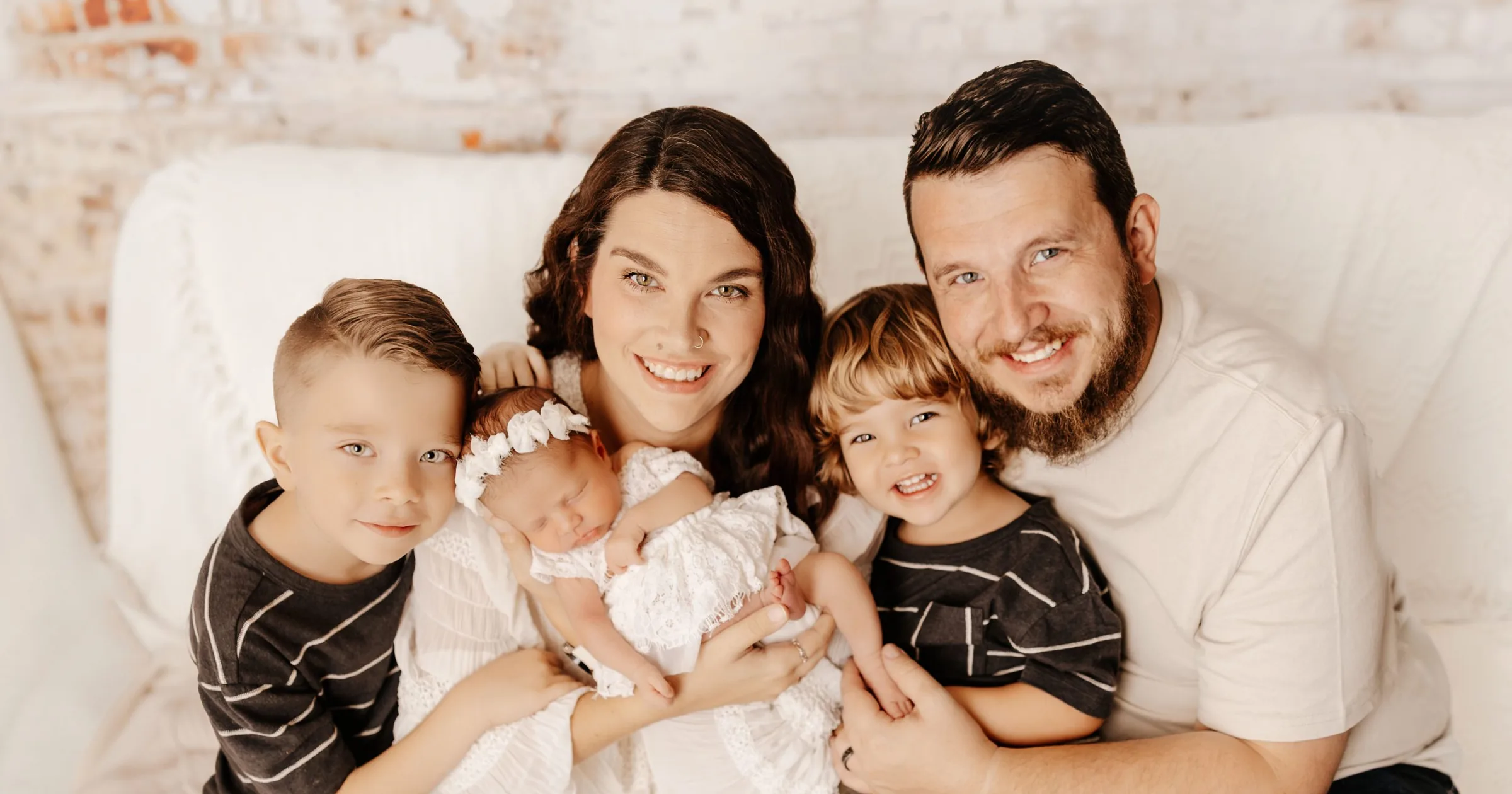
Jameson’s family lives in New Albany, Indiana, about two hours away from the Ronald McDonald House. They’re a family of five: Jameson, now 8, Solomon, 3, and baby Matilda, almost six months old. But back then, their world looked different. It looked like early mornings and long clinic days. It looked like carefully measured meals, therapy tools, and trying to stay positive when progress felt slow. It looked like the kind of stress that seeps into every corner of life — because feeding therapy doesn’t stay at the clinic. It follows families into every meal, every routine, and every day.
Jameson’s first stay at the Ronald McDonald House was simply the night before his initial evaluation. But when his family arrived, they were met with something they didn’t even realize they needed until it was right in front of them: warmth. Friendliness. A welcome that didn’t feel clinical or transactional — but personal. The House quickly became a steady place in an unpredictable season. A place where they could breathe, regroup, and face the next day.
And for Jameson, it became something even more. It became fun. He loved the playrooms. He loved the prize closet. He loved meeting other kids — kids who were also navigating hard things, kids who understood in a way adults sometimes can’t. For a child, that matters. Because when you’re the one who’s different — the one with therapy appointments, medical equipment, and routines that don’t match anyone else’s — it can feel isolating. But at the House, Jameson didn’t feel alone.
In February of 2020, Jameson was offered the opportunity to become an intensive day patient — a major step forward in his care plan. His family stayed nearly two weeks during that portion of treatment. Then, after COVID restrictions eased, they returned again and again: monthly stays for a couple of days at a time, later shifting to school breaks once Jameson began school. For more than four years, their family returned to the Ronald McDonald House regularly — sometimes up to a week each month. Over time, something beautiful happened. The House stopped feeling like a place they stayed. It started feeling like a place they belonged.
For Jameson’s parents, one of the greatest gifts was having a “base” away from home and away from the clinic — a place where they could continue the hard work of feeding therapy in a calm environment. The House had the right chairs. Often, even the utensils that matched what was being used in the clinic. Those may sound like small details, but in feeding therapy, small details are everything. Those details are comfort. Those details are consistency. Those details are what make families feel like they can keep going.
But what stood out most to this family wasn’t just the space. It was the people. Over the years, Jameson formed friendships with staff and volunteers that became an essential part of his experience — and an essential part of his healing. Jameson became known for barging into offices, popping into meetings, and inserting himself right into the middle of the workday like he belonged there. And instead of being turned away, he was welcomed. He was celebrated. He was loved. Staff made time for him — not because they had to, but because they wanted to. They asked about his progress. They noticed the small victories. They cared not just about Jameson as a patient, but about Jameson as a child.
Maddi became his absolute favorite. And before her, Renee helped build the foundation of trust that carried the family through the earliest and hardest days. In the beginning, the journey was rough — and staff members like Renee and Ami witnessed many tears. But they also offered compassion. They offered steadiness. They loved this family through the moments that felt too heavy to carry alone. And that is what makes the Ronald McDonald House different. Because it isn’t just a building close to a hospital. It is a place where families are seen. A place where families are held. A place where families don’t have to be strong every second of every day.
Having a place so close to care made all the difference for Jameson’s family. It meant certainty — knowing where they would stay, knowing they were within walking distance, knowing they were supported. It meant being able to get to the clinic on time. It meant being able to return between sessions. It meant being able to focus on Jameson — instead of worrying about logistics. And financially, it eased a burden that many families don’t talk about until they’re in it. Without the House, this family would have faced hotel costs, extra gas, and fewer opportunities for meals and day-to-day support — all while trying to show up for Jameson’s care in the best way possible.
But perhaps the greatest impact was emotional. Jameson didn’t just appreciate the House. He loved it. Between visits, he would ask to go back. And even now — after completing therapy — he still asks when he can return. Not because he needs treatment. But because the Ronald McDonald House became a place where he felt safe. A place where he felt known. A place where he felt happy.
At one point, Jameson met other children at the House who also had feeding tubes — and he realized something that mattered more than any prize closet or playroom ever could: he wasn’t the only one. He wasn’t alone.
When asked what the Ronald McDonald House meant to their family, they didn’t hesitate. They called it a sanctuary. And when asked what they want donors and supporters to know, their answer was simple — and profound: because the House existed, Jameson’s progress happened faster. His family was able to stay more often. They were able to return more consistently. They were able to commit to the therapy that helped him grow. And without that support, Jameson might still be using his feeding tube today.
One memory stands out among the many — a moment that captures the spirit of this mission perfectly: staff inviting Jameson into meetings, giving him space to laugh, play, and remind everyone in the room what the House is truly about. Because at Ronald McDonald House Charities, this is what “home” means. Not just a bed for the night — but a place where families are supported, children are celebrated, and healing is surrounded by love.